
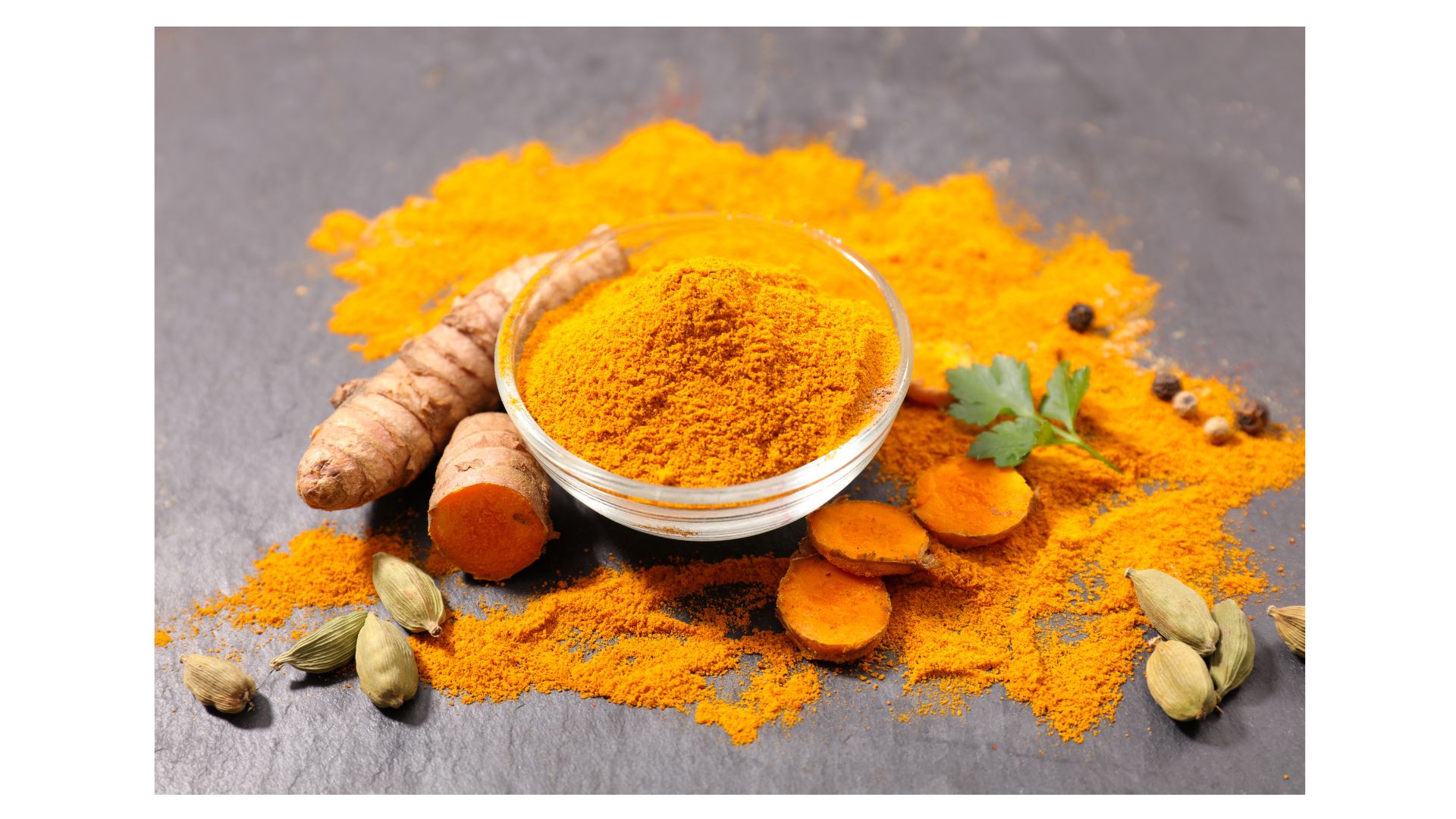
Turmeric, or Curcuma longa, is not only a familiar ingredient in Vietnamese kitchens. It also contains special chemical compounds that can change color in environments with different pH levels. This makes turmeric a simple, safe and fascinating tool for hands-on STEM learning.

A local material for colorful chemistry learning
Turmeric Lab is an integrated STEM activity that connects scientific knowledge, extraction techniques and creative applications. Students learn how to create and use a natural color indicator from turmeric while exploring pH, acids, bases and the relationship between chemistry and daily life.
Through simple experiments, learners can see chemical changes with their own eyes, design small testing kits, create color-changing artwork and discuss real-world topics such as food safety and environmental awareness.
Curcumin gives turmeric its special color-changing property
Curcumin is the main active compound in turmeric and belongs to the curcuminoid group. Its chemical formula is C21H20O6, and it gives turmeric its characteristic yellow-orange color.
- Yellow in acidic environments with pH below 7
- Orange-red to reddish-brown in alkaline environments with pH above 7
- Visible color transition around pH 7.4–9.4
- Known for antioxidant and anti-inflammatory properties
From a kitchen spice to a natural pH indicator
Because curcumin changes color clearly in different pH environments, turmeric can become an ideal natural pH indicator for simple and engaging chemistry experiments.
This activity helps students understand that science is not far away from daily life. A familiar local material can become a doorway into chemistry, technology, engineering design and creative learning.
How turmeric indicators can be used in learning activities
Turmeric indicators can be used across chemistry lessons, science projects, technology design tasks and integrated STEAM activities.
“`Chemistry Learning
- Teaching pH, acids and bases
- Illustrating neutralization reactions
- Simple acid-base titration
- Exploring chemical environments
Science Projects
- Testing pH in different soil samples
- Checking the acidity of rainwater
- Screening for borax in food samples
- Studying household chemicals
Technology Activities
- Designing a simple pH testing kit
- Making color-changing indicator paper
- Creating smart ink that responds to pH
- Developing low-cost learning tools
Integrated STEAM
- Connecting biology, chemistry and physics
- Creating color-changing turmeric art
- Analyzing color and pH data
- Learning from local natural materials
Three engaging experiments with turmeric indicators
The following experiments are suitable for classroom STEM activities with teacher guidance. Students should not taste any tested sample, and unknown food samples should be handled carefully. The borax screening activity is for educational demonstration only and should not replace official food safety testing.
“`Color Change across Different pH Levels
Objective: Observe how turmeric indicator changes color in solutions with different pH levels.
Materials: Turmeric indicator solution, vinegar, lemon juice, water, soap solution, baking soda solution, test tubes or small glass cups.
- Prepare 5–6 small test tubes or cups.
- Label each container with a number.
- Add a different solution to each container.
- Add a few drops of turmeric indicator to each solution.
- Observe and record the color changes.
Expected result: Turmeric remains yellow in acidic solutions such as vinegar and lemon juice, and turns orange-red or reddish-brown in alkaline solutions such as soap or baking soda.
Screening for Borax in Food Samples
Objective: Use turmeric indicator paper to screen for borax in selected food samples.
Materials: Turmeric indicator paper, food samples such as Vietnamese pork roll, rice cake or noodles, a small plate and distilled water.
- Take a small amount of the food sample.
- Crush it and mix it with a small amount of distilled water.
- Place turmeric indicator paper on the prepared sample.
- Observe any color change within 1–2 minutes.
Expected result: If the sample contains borax, which is alkaline, the turmeric paper may change from yellow to orange-red or reddish-brown. If borax is not present, the paper remains yellow or changes only slightly.
Painting with Smart Turmeric Ink
Objective: Create smart ink from turmeric and make artwork that changes color.
Materials: Concentrated turmeric indicator solution, brush or marker, drawing paper, diluted baking soda solution and a small spray bottle.
- Dip a brush or marker into the turmeric indicator solution.
- Draw a picture on paper and let it dry naturally.
- Prepare a diluted baking soda solution in a small spray bottle.
- Lightly spray the baking soda solution on the areas where you want the color to change.
Expected result: The sprayed areas change from yellow to orange-red, creating a colorful and surprising artwork.
The meaning of Turmeric Lab
Turmeric Lab is more than a fun classroom activity. It connects scientific knowledge with everyday life, raises awareness of food safety and environmental protection, and highlights the value of local materials in STEM education.
By using a natural, accessible and environmentally friendly material such as turmeric, this activity supports a sustainable model of STEM education that is relevant to the economic and cultural context of Vietnam.