

STEM for Girls gives girls in Vietnam, especially in rural and mountainous areas, more chances to explore science, technology, engineering and mathematics, and to see themselves in STEM careers.
More than 60% of the students SEPA supported in 2023–2025 are girls. The programme brings together STEM workshops built on local culture, robotics clubs for girls, and contests that celebrate women and girls in STEM. It is part of SEPA’s STEM for Vulnerable Adolescents project.
Why girls need more doors into STEM
Demand for people with STEM skills keeps growing, yet women make up only about 29% of the STEM workforce. In rural and highland Vietnam the gap starts early. Many girls never meet a woman engineer or scientist, have little access to labs or equipment, and grow up hearing that science and technology are “not for girls”.
We have seen what changes this: hands-on activities where girls build things themselves, role models they can relate to, and lessons that start from their own culture and daily life. When girls discover the mathematics in a conical hat or the engineering in their grandmother’s weaving, STEM stops feeling foreign.
Confidence
Girls lead the activities, work in teams and present their own ideas and products.
Role models
Women scientists, engineers, teachers and artisans share how they got where they are.
Hands-on STEM
Measuring, designing, weaving, building and testing, with simple local materials such as bamboo, yarn, leaves and rice.
Future pathways
Information on STEM subjects, study options and jobs, including jobs in the girls’ own home districts.
STEM workshops for girls
Each workshop starts from an object, plant or craft the students already know. Girls look for the mathematics, science and technology hidden in it, then make something of their own. A typical workshop has four parts: an introduction to STEM fields and careers, skills for success (critical thinking, problem solving, communication and teamwork), conversations with women in STEM, and hands-on activities.
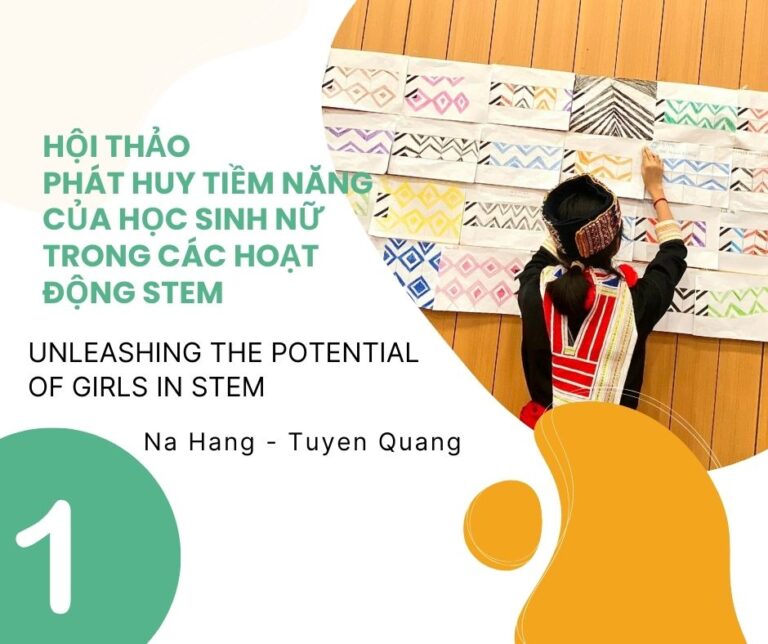
Unleashing girls’ potential in STEM
Na Hang, Tuyen Quang · November 2023. Inspired by the Tuyen Quang hydropower plant, girls explored STEM careers in their own district and patterns on traditional costumes.
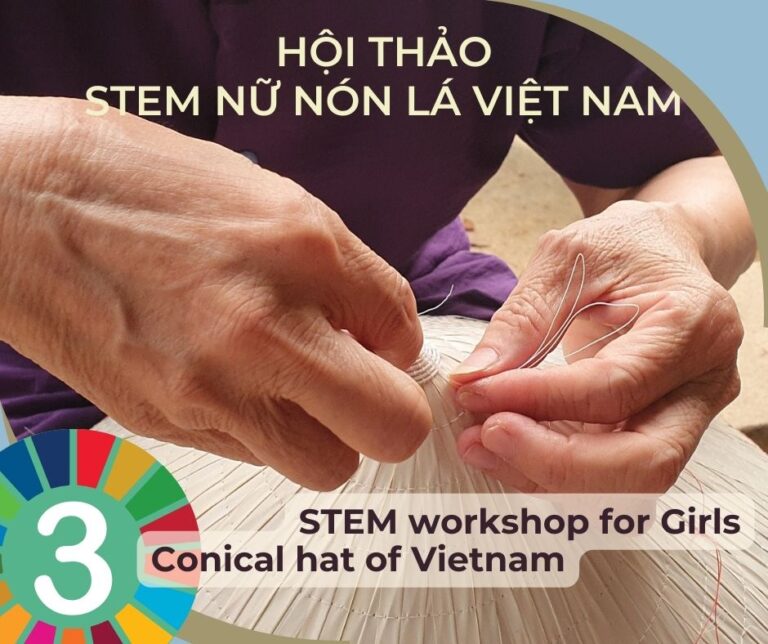
The conical hat of Vietnam
Gia Thanh, Phu Ninh, Phu Tho · December 2023. Girls studied the geometry and physics of the conical hat and met artisan Trieu Thi Nhuong, who has made hats for over 40 years.

Bamboo and local careers
Lang Chanh, Thanh Hoa · December 2023. At the district boarding school, Thai and Muong girls built creative products from bamboo, the base of the local economy.

The beauty of science
Chi Lang High School, Pleiku, Gia Lai · March 2024. “Science in the kitchen” and experiments on water pressure, air pressure and pH indicators.

Mathematics and science of the ban flower
Dien Bien Phu · April 2024. Students measured petals of the ban flower, symbol of the Northwest, and analysed the data.

The beauty of mathematics
Luong Nang, Van Quan, Lang Son · May 2024. Tay and Nung girls found geometry in their costumes, made cardioids from yarn and explored tessellation.
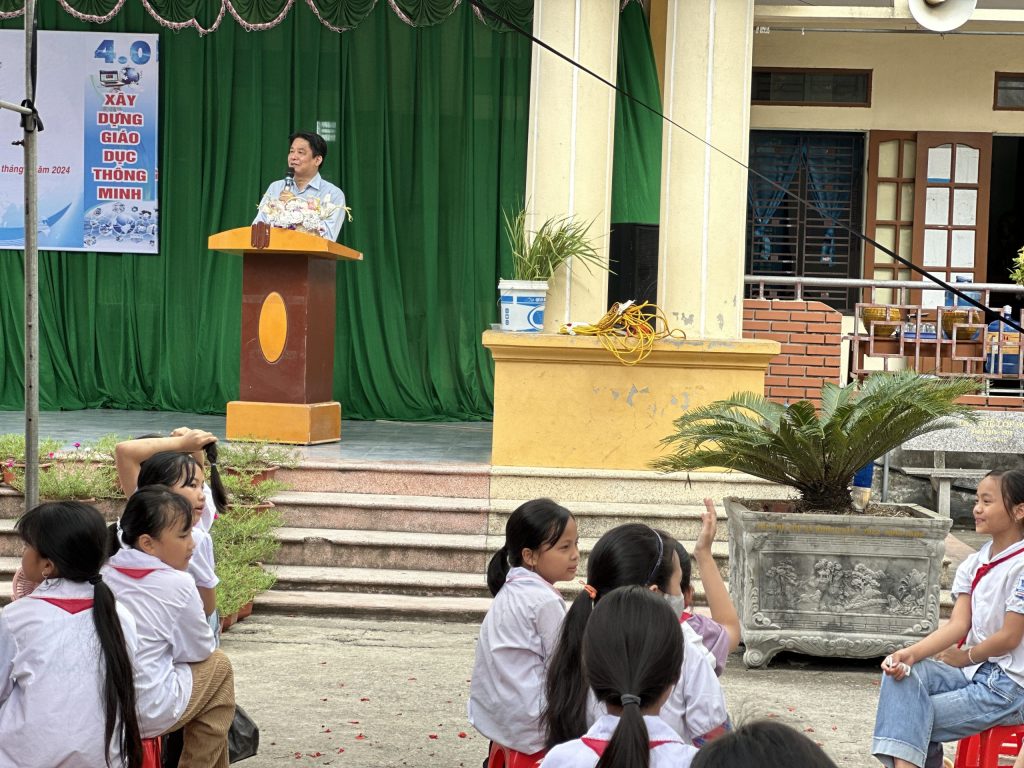
The science of rice
Dong Cac, Dong Hung, Thai Binh · May 2024. In Vietnam’s “rice bowl”, girls explored wet rice farming, food security and technology in agriculture.
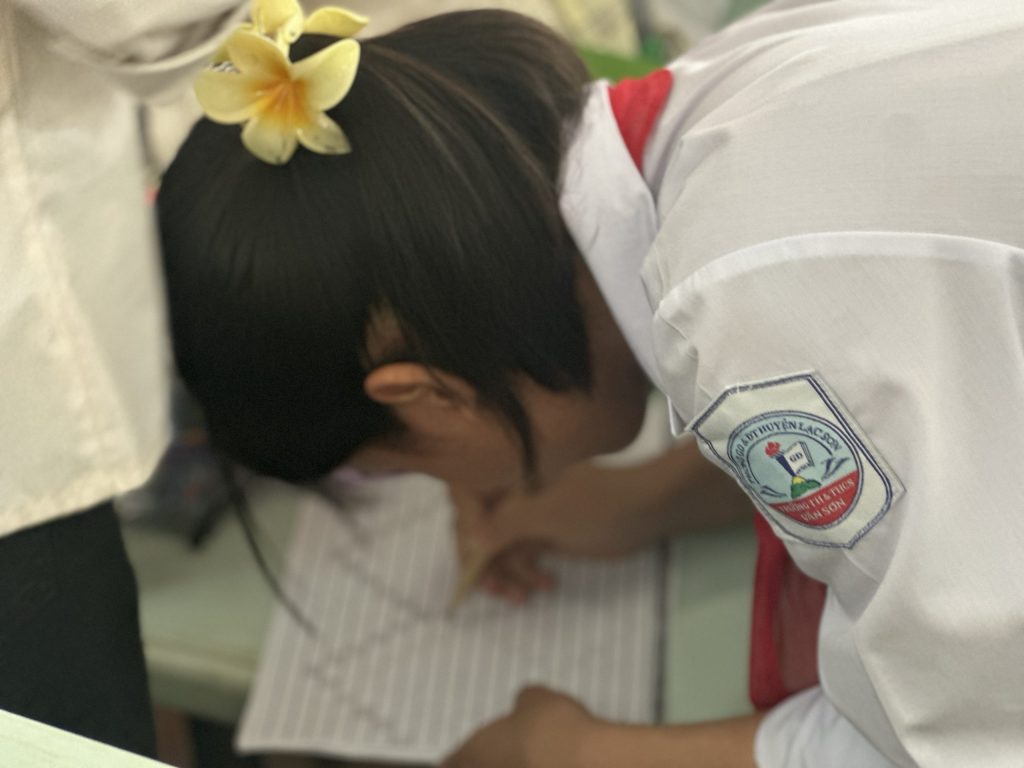
Weaving: the programming of threads
Lac Son, Hoa Binh · 2024. Muong brocade seen as engineering design: girls decoded the rules of traditional patterns and designed their own.
Results so far
From the STEM for Vulnerable Adolescents impact report (March 2023 – August 2024) and SEPA’s programme data for 2023–2025.
Workshops took place in Na Hang (Tuyen Quang), Lang Chanh (Thanh Hoa), Phu Ninh (Phu Tho), Pleiku (Gia Lai), Van Quan (Lang Son), Dien Bien, Lac Son (Hoa Binh) and Dong Hung (Thai Binh), most of them in mountainous, border or poor districts. Read the full impact report.
Robotics clubs for girls
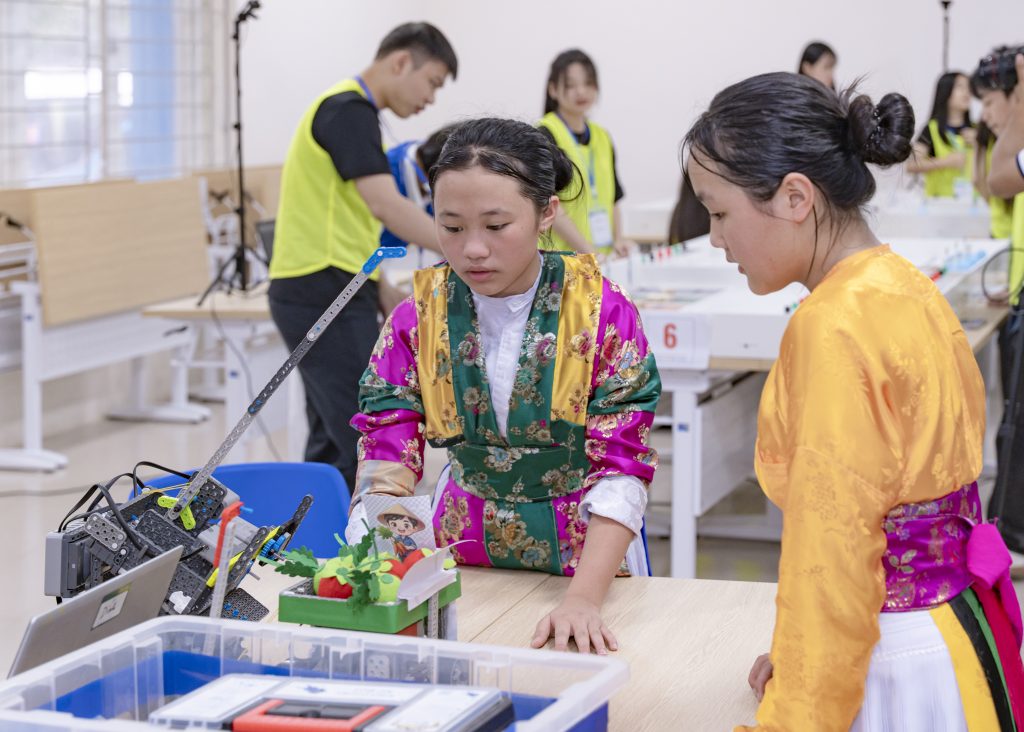
In Van Quan district (Lang Son), SEPA helped set up a robotics club for girls. Girls’ teams with strong results received VEX IQ robots and drone bots so they could keep practising and enter competitions.
Women teachers are just as important. Women teachers show girls that robotics is for them too. Our story about teacher Do Thi Huong Tra (in Vietnamese) follows one woman robotics coach and her students.
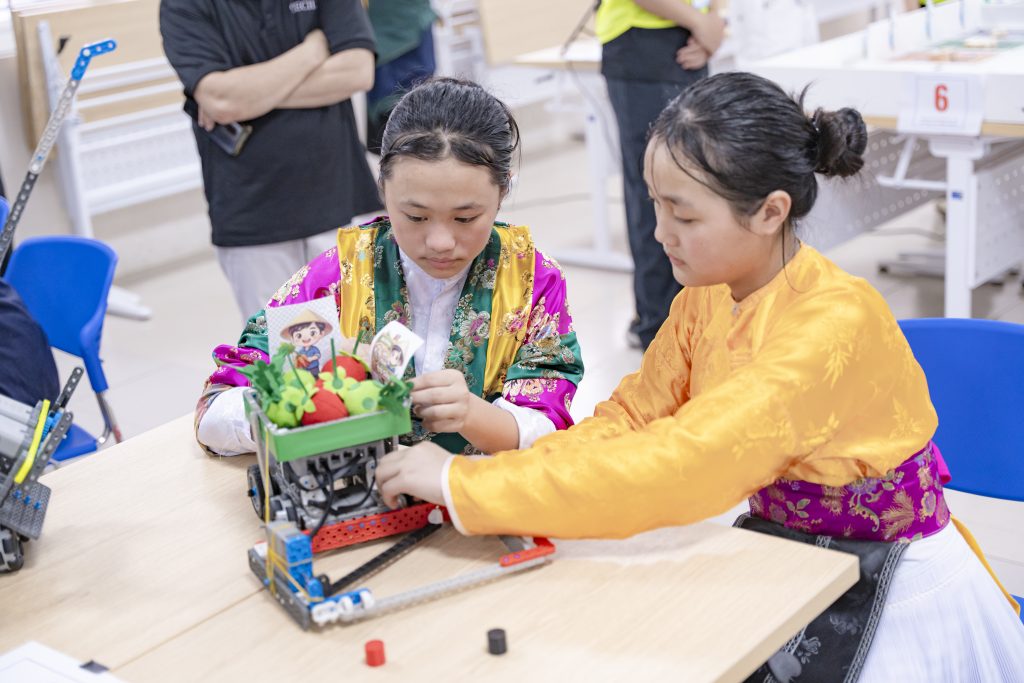
Girls also take part in the robotics tournaments SEPA organises, as in the photo at the top of this page.
Celebrating women and girls in STEM

Contest: Stories of Women and Girls in STEM Education and Digital Transformation
Co-organised by SEPA, the Centre for Education Promotion and Empowerment of Women (CEPEW) and the STEM Centre of Ho Chi Minh City University of Education, with support from the Canada Fund for Local Initiatives (CFLI). The contest received more than 200 entries from teachers across Vietnam. An expert forum brought in scientists from the University of Science and Technology of Hanoi (USTH) and the Vietnam Academy of Science and Technology.

Photo contest: The Beauty of Women and Girls in STEM (2024)
An open photo contest inviting people across Vietnam to capture women and girls learning, researching and working in STEM. There were two categories, Women in STEM and Girls in STEM, with 30 prizes worth VND 34 million in total. Judging looked at relevance, diversity and inclusion, and the strength of the story behind each photo.
Face of STEM
A series of profiles honouring women who are passionate about STEM and STEM education: scientists, engineers, mathematicians, researchers and STEM teachers.
Where the programme comes from
STEM for Girls grew out of the 2023 Power of Radiance Award, presented by Clé de Peau Beauté to SEPA founder Dao Thi Hong Quyen after a nomination by UNICEF Viet Nam. The award recognised her work bringing sustainable, creative STEM education to girls. Its grant launched the STEM for Vulnerable Adolescents project, which serves three groups: girls, students in mountainous and rural areas, and students with disabilities.
The project set a target that more than 60% of students supported would be girls. It works through teachers first, because teachers keep STEM going long after a workshop ends.
Frequently asked questions
Who can take part in a STEM for Girls workshop?
Workshops are designed for girls in primary, lower secondary and upper secondary schools, especially in rural, mountainous and ethnic minority areas. Teachers from the host school and nearby schools join too, so they can run similar activities afterwards.
Can our school or district host a workshop?
Yes. Schools and district education offices can contact SEPA. We design each workshop together with the host, based on local culture, crafts and the materials available.
What do girls actually do in a workshop?
They learn about STEM fields and careers, meet women working in STEM, and spend most of the time on hands-on activities: measuring, designing patterns, building with local materials, running simple experiments and presenting their work.
How can organisations support the programme?
Companies, foundations and international organisations can sponsor workshops, donate robotics kits for girls’ clubs, or connect women professionals as mentors and speakers. See our partnership options.
Bring STEM for Girls to your community
Schools, education offices, sponsors and women in STEM who want to mentor girls are welcome to get in touch. We will design a workshop that fits your local culture and conditions.
Cao Dai 2 Hamlet, My Loc Ward, Ninh Binh Province, Vietnam
+84 817 750 229
sepa@sepa.org.vn