SEA MTLM 2025: A Forum Honoring Innovative Mathematics Teachers Across Southeast Asia
SEA MTLM 2025: A Forum Honoring Innovative Mathematics Teachers Across Southeast Asia
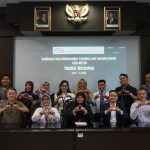
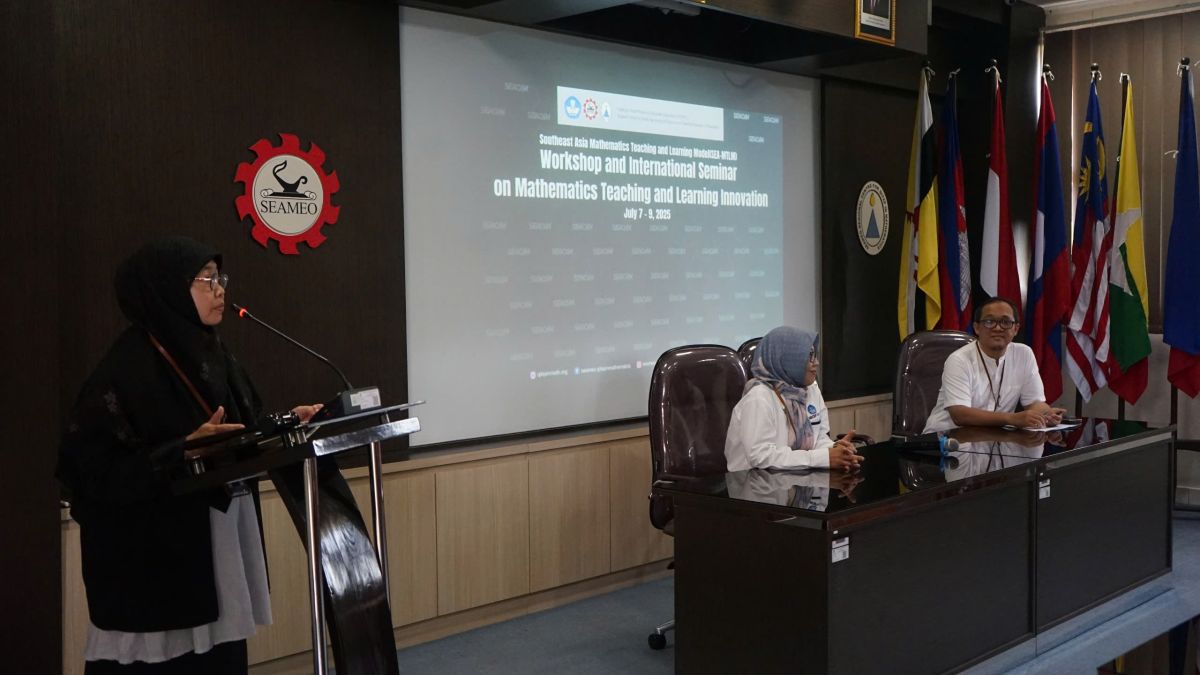
In the context of Southeast Asia’s growing focus on improving teaching quality and strengthening learners’ applied mathematical competence, SEA MTLM 2025—organized by SEAQIM in Yogyakarta, Indonesia—created an academic space for mathematics teachers to share experiences, present innovative teaching models, and build professional connections.
Context and purpose
SEA MTLM 2025 was designed to support classroom-level pedagogical improvement by enabling teachers across the region to exchange ideas and showcase teaching innovations that respond to real challenges in mathematics classrooms.
SEA MTLM (Southeast Asian Mathematics Teaching and Learning Model) functions as an academic forum where teachers are invited to present instructional initiatives aimed at addressing specific teaching-and-learning issues in mathematics.
Participants and featured experts
This year’s event brought together teachers from Vietnam, the Philippines, Malaysia, and Indonesia, alongside researchers and education experts in the region. Featured contributors included:
- Prof. Ariyadi Wijaya – Universitas Negeri Yogyakarta (Indonesia)
- Assoc. Prof. Dr. Nguyen Tien Trung – Vietnam National University, Hanoi (Vietnam)
- Dr. Tan Liang Soon – Academy of Singapore Teachers (Singapore)
A key focus: numeracy connected to real life
One of the workshop’s key emphases was numeracy—the ability to apply mathematical knowledge and skills to solve real-world problems in daily life, work, and society.
In many countries across the region, students still struggle to connect theory with practice and mathematics with everyday life, which can reduce both interest and confidence in learning. The models presented at SEA MTLM 2025 aimed to address this gap through creative, flexible approaches tailored to the realities of different classrooms.
Professional learning: presentations, pedagogical review, and discussion
The workshop included themed sessions, pedagogical critique, and professional discussions. These activities helped teachers broaden their professional thinking, reflect on classroom practice, and develop sustainable professional capacity.
The Sam Ratulangi Award: recognizing outstanding teaching models
As part of SEA MTLM 2025, the Sam Ratulangi Award continued to honor teachers whose instructional models were evaluated as outstanding—highlighting not only methodological innovation but also positive influence on real classroom practice.
The organizing committee initially received around 90 applications from teachers across three levels (primary, lower secondary, and upper secondary) in Southeast Asia. After preliminary rounds, 9 finalists were selected and grouped into three categories by school level, with three teachers in each category.
Selection criteria included lesson plans, professional reports, and pedagogical ideas—especially how effectively each model addressed practical classroom challenges in mathematics teaching.
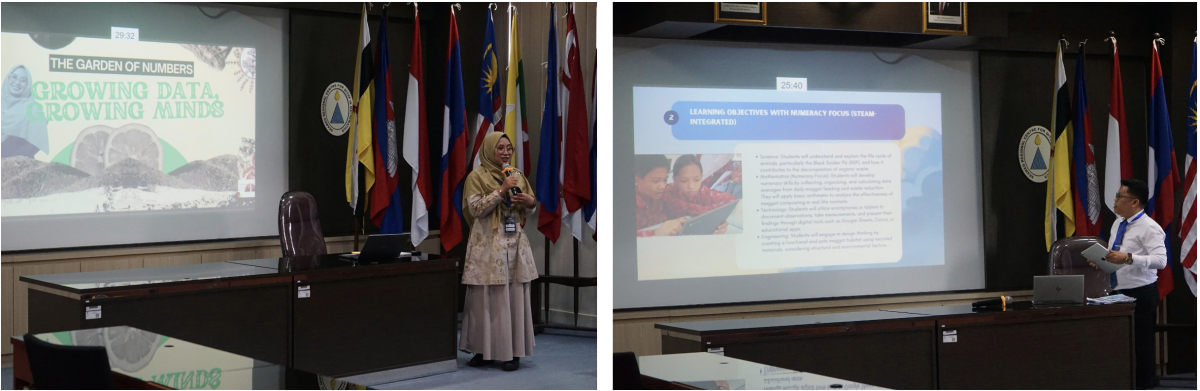
According to the organizers, selected lesson plans showed thorough preparation and clear theoretical grounding for learning activities, including assessment, technology integration, STEM elements, and the design of positive learning environments. Many models made mathematics more vivid and relatable by linking it to themes such as sustainability, environmental protection, science applications, and learners’ everyday experiences.
Integrating local culture into mathematics teaching
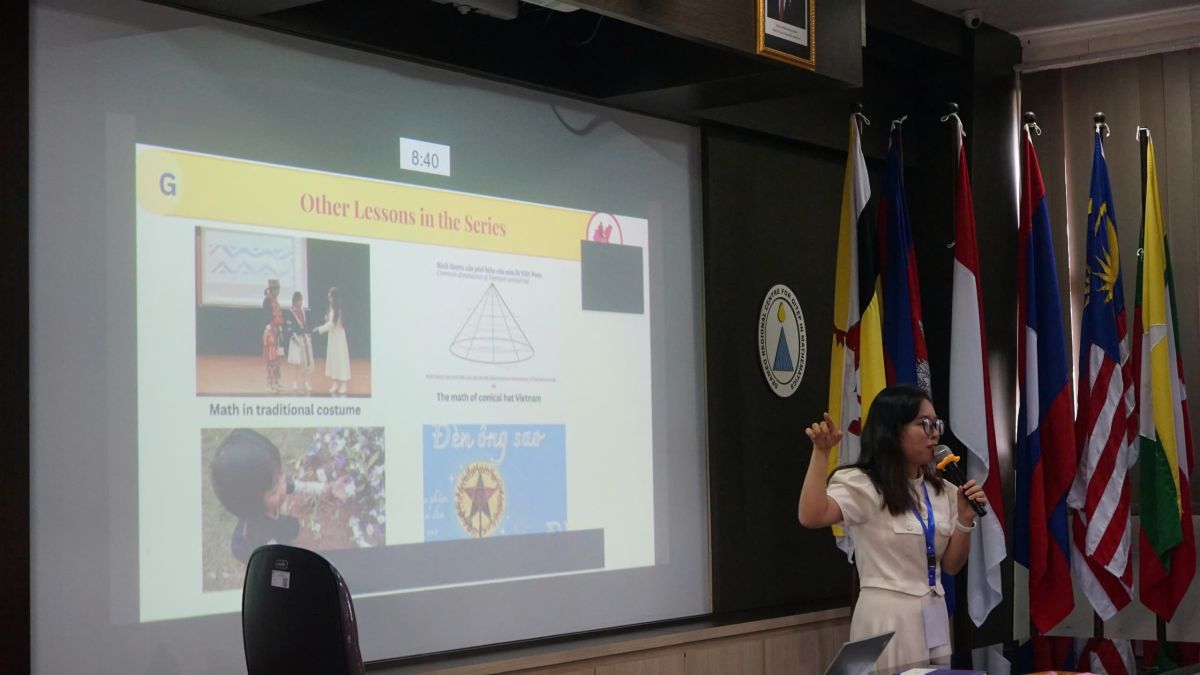
Several models creatively embedded local cultural elements into mathematics content and pedagogy. For example, the model presented by Ms. Dao Thi Hong Quyen (Vietnam) drew on traditional symbols such as ban flowers and patterns on ethnic costumes to connect mathematical concepts with cultural values—helping students approach the subject through a familiar and identity-rich lens.
In addition, strong English communication skills were noted as an advantage among many teachers from Indonesia and the Philippines. Presentation materials and classroom evidence highlighted creative task design, active student participation, and teachers’ professional commitment—factors that supported the expert panel’s positive evaluation of innovation across the region.
Conclusion
With a clear orientation toward improving pedagogy at the classroom level, SEA MTLM 2025 reaffirmed teachers’ central role in the region’s education reforms and underscored the importance of specialized academic forums—where knowledge, experience, and innovation can be shared systematically and sustained within the Southeast Asian education community.